Posts Tagged ‘murder’
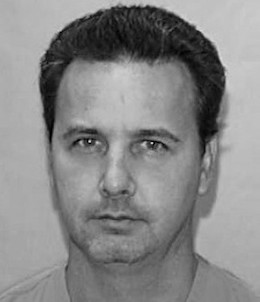
Rodney Alcala is a convicted serial killer whose raping and tortured killings of four women has resulted in a death sentence. Rodney Alcala raped one woman with a claw hammer. Yet the spurious criminal justice system that rewards convicted killers with lifetime jail sentences has upset many members of the general, let alone the victims and their friends and families. Rodney Alcala was sentenced in 1980 for the killing of a Huntington Beach woman. Additional victims of Rodney Alcala have stretched legal court proceedings to the present day.

Caught raping an eight year old girl in 1968, Alcala served thirty four months. The nature of Alcala’s crimes are savagely violent, premeditatively abusive, and sexually motivated in origin. Alcala struck down men, women and children in his twisted lust for episodes of torture, rape and abduction. Channeling a rage or lust unknown except in the most vicious of serial killers, Alcala’s propensity for murder was matched by his cunning in enticing victims. Alcala’s “shtick” was the use of a camera and the pose as a photographer to capture the attention of victims and build enough trust to lead them astray.
The March 2010 sentencing of Rodney Alcala for the Orange County murders stems from killings from the 1970′s. Common to the cases of serial murderers in America of this era, development of legal DNA evidence brought Alcala’s career at large to a halt. Alcala is suspected in the strangulation death and disappearances of many other victims. Alcala’s habits make law enforcement professionals dread the existence of other undisclosed victims both as bargaining tools and further proof of his serial killing deeds. Even among the most brutal and vicious serial killers, Rodney Alcala stands apart.
(more…)
In 1979, Atlanta was re-emerging as the jewel of the South, a town rumbling with political and economic pulses that created opportunity, arts, and culture echoed only faintly elsewhere. Unfortunately, poverty and African-American race relations would pave the way for a killer to murder many young people whose futures were eradicated overnight.
The deaths of a series of innocent young African American people conducting casual errands produced bodies found in the river and roadway. Children started vanishing while about everyday activities. These were all young people or children or very young juvenile adults. Fresh young black faces smiled in police files from photographs gone forever dim. Twenty seven to twenty nine missing persons were attributed to the Atlanta Child Murderer.
The late 1970′s was “heavy” time for a racial killer to strike Atlanta. A rash of ugly race relations, accusations, Atlanta’s political upheaval, and backlash against police and law enforcement occurred all at once. Police were unable to find a white perpetrator, and African Americans were insulted when profilers targeted a black killer. Concern, anger, grief, fear and rage in 1979-1981 shook Atlanta to its core. The killings progressed day by day and stretched racial tensions to the breaking point.
Police behavior during this period has been strongly questioned. Constant challenges that police did not pursue the killer because the targets were African-American were substantiated by the media and the political totems of the time. The notoriety of the Atlanta Child Killings was rife throughout the nation. Mohammed Ali and Gladys Knight came to Atlanta to donate money to the families of the victims, money that would itself become mishandled and lost.
(more…)
The Chicago World’s fair has a grandiose and sumptuous feel to it even in the 1880’s suggesting grand hotels, formal dresses, and fancy mustaches. This Fair was to cast a positive glow over a city that regularly made headlines for violence, riots, and murders. Even the Mayor of Chicago was murdered on his own doorstep. But the reputation of Chicago still had bolgias to descend to, literally. The plan for the World’s Fair was to keep the image of the city of Chicago somewhat attractive for future generations. But in the basement of the Holmes Castle a horror lay hidden.

Yet during the 1893 Chicago World’s Fair, a “Murder Hotel”, run by a stunningly precocious serial killer, performed ritual murders with outlandish and elaborate equipment. The University of Chicago at Ann Arbor issued a medical license to one Dr. Herman Mudgett, who later renamed himself A. A. Holmes. Holmes would be the first and most stunningly inventive of the American serial killer pantheon. The story of the Holmes Murder Castle transcends mere crime history and succeeds into a new one: Americana Macabre.
While no serial killer is more infamous than Jack the Ripper, Chicago’s nightmare had barely begun. In the shadow of the Whitechapel murders, a hotel offering White City lodgings did a brisk business in young female guests, secretaries, and romantic ladies. Camouflaged by the activity of the big city thriving, H. H. Holmes performed triple digit murders in an era where even a street attack would cause a sensation. The Mudgett episode is one of America’s darkest.
Ironically, just as Sigmund Freud was introducing the superego and conscious to the thinkers of Eastern Europe, individuals on the other end of the planet were subduing it. Small town life and frontier romance had built new cities where elements of the metropolis included industrial malaise and immigrant labor. Uneducated women took what jobs they could get. Mudgett was an educated con man with charm, looks, and money to burn. He was also a monstrous serial killer.
(more…)
Tags: america, american, canada, doctor, H. H. Holmes, Herman Webster Mudgett, murder, philadelphia, serial killer, toronto, united states Posted in American Serial Killers | No Comments »
Add this post to Del.icio.us - Digg
Jane Toppan was as violent a shock to nineteenth century America as the Manson murders would be almost a century later. One of many serial killers using an avocation to nursing or medicine, Jane Toppan was a nurse who had access to both medicine and victims with little or no supervision. But many experts attest that Jane Toppan was less a programmatic serial killer than simple an insane woman whose access to medical resources enabled her to end life in the double digits.
The rare female serial killer, Toppan used her medical resources to experiment on patients with fake charts and using strychnine and atropine. Dubbed the “Angel of Death” from later newspaper reports, Toppan “topped” over seventy victims in her New England hunting ground. Getting private income from members of the public as a private nurse and earning respect as a ward sister, Jane Toppan has institutional credibility in an era when public knowledge of clinical medicine was rare.
Jane Toppan needed no vehicle to cruise for patients. As a nurse at Cambridge Hospital, they were already within her purview. While initially her victims were patients she disliked, there is no reason to suppose anyone was safe from her killer bedside manner. The epithet “Angel of Mercy” was common to nurses in the period. But Jane Toppan delivered a special meaning to about thirty human beings of which mercy played no part.
Born Honora Kelly in 1857, Jane Toppan was the name her life evolved her into. Who knows who “Honora Kelly” might have been? Jane’s birth father and sister both went insane. Jane wasn’t far behind. Adopted by the Toppans from a Boston orphanage at age five, Jane was raised in the shadow of her pretty and privileged foster sister. Jane’s memories of her “mother’s” abuse would come back to haunt them.
(more…)
Tags: america, american, hospital, insane, insanity, jane toppan, murder, nurse, patient, serial killer, united states Posted in American Serial Killers | No Comments »
Add this post to Del.icio.us - Digg
Donald Henry Gaskins was a serial killer of absolutely ugly dimensions who ruled the Deep South with an unimaginable terror. South Carolina was an unsafe place to be looking for a ride on the highway, especially from 1955 through to 1977. The target of Gaskins’s murders was principally women, although the motivation is unclear. His early petty theft career landed him in dark places, where a career in murder soon started. An early marriage and parenthood didn’t soften a lifetime of brutal aggression.

Gaskins started out life diminutive and not particularly brainy. But not every man five feet four inches commits serial murder. Adolescent assault on women triggered a reform school and incarceration climate where sexual abuse due to his size was unavoidable. But knowing how this might come to pass, why did Gaskins commit crime after crime that would railroad him toward the very confinement that would institute his sexual abuse? Gaskins did as much to pursue a path of positioning himself in abusive conditions as possible.
Gaskins claimed a deep hatred of women but the origin is not certain. Gaskin’s killings were so numerous he is termed by many criminologists as a mass murderer. Did Gaskins’ physique determine his outcome in life, or did his psyche merely condition him for a lifetime of misguided aggression to take the life of others? Was Gaskins headed down the road of a psychotic criminal and serial murderer no matter what his height?
Called “Pee Wee” for his physically diminutive stature, Gaskins was part of a set of boys known as the Trouble Trio and was soon committing burglaries and other crimes with them. One burglary too many resulted in a former schoolmate recognizing him, and the law intervened. Donald Henry Gaskins was a product of the juvenile home for boys called the South Carolina Industrial School for Boys. In this facility until age eighteen, Gaskins was sexually abused in a homosexual manner of rape. Yet his homicidal aggression does not stem strictly from this period.
(more…)
While it is a mark of camp culture to reference sadomasochism and sexuality as a game or dungeon pursuit, David Parker Ray made this a reality. His custom built $100,000 trailer full of torture devices and S & M paraphernalia gives testimony to the deeply rooted deviancy at work in his nature. The instinct to abduct, torture, and kidnap women and maintain a level of pain and continual submission has no redeeming social value. The killing was premeditated, a lust crime, and a manipulation of control and dominance over an undeserving victim.

Unlike many profiled serial killers, David Parker Ray had a clean rap sheet and few problems with others. His disturbing sex hobbies were kept under wraps and only carelessness led to his arrest. David Parker Ray derived no monetary or other profit from his crimes, such as video earnings, internet publicity, or book royalties from memoirs or movie deals. In fact, David Parker Ray did not survive long in prison although the judge afforded him 224 years, plenty of time to get the hang of incarceration.
Most human beings will luckily not have any contact with evil such as Ray inflicted and created in his “Toy Box’. the specifics of the crime scene involved a litany of unorthodox items serving as weapons or instruments of torture for the use of by Ray and his girlfriend Jessy. At trial Ray’s daughter was charged and may have been involved in “roping” or luring victims to the Toy Box or other locations where Ray secured their persons involuntarily. Kidnapping and conspiracy were just as biting offenses to the ultimate trial as the sexual abuse, as Cynthia V. Hill had been taken across state lines from Oregon.
(more…)
How could one man conceive of committing three hundred killings? Henry Lee Lucas was probably the only serial killer whose killings had an unmistakably rational basis in his psychological upbringing. Born in 1936, this man would challenge law enforcement to prove, disprove, and prove again just which killings he was culpable for. Was Lucas making the whole thing up, or was his legal representation managing a master stroke of defense?
The childhood of Henry Lee Lucas set the stage for a violently unbalanced life and an irrational attitude towards socialization, sexuality, and crime. Yet the mind of Henry Lee Lucas would prove sharp as a tack, prompting cynical law enforcement personnel to doubt the viability of the unsolved cases. The boy who was stabbed by a brother in the eye and dressed like a girl by his mother would make the front page of American newspapers and on news bellwether “60 Minutes”.
Found guilty of the second degree murder of his mother, Lucas had been let out of prison in 1970 due to overcrowding. The visual image of Henry Lee Lucas, his face distorted by a destroyed eye, frightened a generation of awestruck Americans tantalized by his tales of triple digit killing. In an era when such killings were just beginning to make the news, the deeds of Henry Lee Lucas astonished a rapt public. Law enforcement tripped over each other trying to close cases. The television and newspaper coverage detailed double digit confessions of killings allegedly performed for no other reason than a random taste for blood.
Lucas never denied being raised in want and claimed “I hated everybody.” Despite a tendency to brag, Henry Lee Lucas was believed culpable for several dozen filed murder cases. Yet if Henry Lee Lucas was to be believed, there were hundreds more waiting to be discovered. Could the uneducated son of poor mountain people with little to no resources really kill that many people without witnesses or evidence?
(more…)
Tags: america, american, confession, confession killer, death penalty, george bush, henry lee lucas, murder, ottis toole, serial killer, texas, united states Posted in American Serial Killers | 1 Comment »
Add this post to Del.icio.us - Digg
Why is Ted Bundy so mesmerizing a media figure? The sensation surrounding this most deadly of killers stems from his repeated and almost gleefully enthusiastic transgression of the most precious and sacred of human shibboleths, the taking of human life. But perhaps also later in his career he became enamored of his profile as a deadly serial killer, obtaining for once in his life that “specialness”, celebrity, and recognition he felt denied him elsewhere. He was executed in 1989, a Death Row “star”.

Bundy managed his media exposure and heightened his celebrity throughout his incarceration, giving manipulative interviews and only rarely revealing the real ego driving the cruelty and killing lust that drove him. In the act, Ted Bundy’s compulsion to kill was hardly a welcome one. He had to drink alcohol to prep for the murderous cruising of women, and became addicted to conducting sexual activities with the dead corpses of his prey. Bundy pursued an alien track of life at a right angle to the course of normal people.
Much has been made of Ted Bundy’s love of the good life and his theft habits as a lifeline to luxury and status. But whereas a smarter man might have used his brutal temperament to leverage a fortune from killing for profit, Ted Bundy succumbed again and again to his lust to kill to substantiate participation in his necrophiliac sexual exploits. Bundy studied law in college and put a lot of effort into fooling the people he met about who he really was. In the 1970’s, American social attitudes and class barriers still existed enough to make Ted Bundy look like a great “catch” to the newcomer to his orbit.
(more…)
The lives of five young women and one man, their families’ grief, and the tension of a city under siege are the heritage of the Son of Sam killer, one of the most notorious serial killers ever. North and South of La Guardia airport, inside New York City for about a year residents never knew when a pair of hands would reach for them, or when a gunshot would herald their last breath. Killing some but leaving seven others wounded, the “Son of Sam” haunted the Bronx and Brooklyn streets in the dawn hours, leaving a grisly aftermath.
The city of New York was undeniably held in the grip of terror in the mid-1970’s by a Brooklyn born killer known as the “Son of Sam”. The Son of Sam was also known by his weapon of choice as the “44-caliber killer”. But the pathology of this killer was so twisted that it was not the anonymous city life or face-in-the-crowd anomaly, or even sexual lust, that drove him wild, but a hybrid chain of attempts of one man’s mind to make sense of it all.
Born in 1953, David Berkowitz might have been any child in the northernmost precincts of NYC. The child of kosher Orthodox Jews, Pearl and Nathan Berkowitz enjoyed their family life with their adopted son. But the concept of being an adopted child and the unwelcome peer mockery for this in a time of little tolerance subdued Berkowitz’ spirit. An only child, Berkowitz would have few confidantes and no peers to know of his internal torments.
(more…)
John Edward Robinson is called the Internet Serial Killer, but not all his victims were those he met online. Rather, John Robinson was an unusually accomplished con artist whose adept scams and multiple cons and frauds kept him at large and supporting a family for decades. Operating in the Midwest and the heartland, Robinson captured the attention of women looking for a new start or the “right” man, and delivered them unto death.
Robinson is titled the Internet Serial Killer because he was the first criminal serial killer whose exploits developed the Internet as a predatory hunting ground for new victims. A master swindler and determined scammer, Robinson juggled multiple schemes of women and plans that were fictitious and formed to exploit women and derive profit thereby. At trial, Robinson’s defence team would allege he was the fourth generation of a depressive and clinically dissociative personality. Yet his mind for the swindles was always razor sharp.
The Internet Serial killer was not only significant for his plumbing of a new medium for victims. The life of any serial killer generally ends with them being caught and put for trial after a limited gruesome career, with notable exceptions such as the Green River Killer. But the sheer burden, cost, handling chores and normal legal defence responses absorbed much more time than normal. The victims’ families, witnesses, and jury pool selection extended year after year long after Robinson’s arrest.
(more…)
|
|